Disney names Adobe its AI partner: what it means for designers
Adobe will build custom Firefly models trained on Disney's own IP. Here is what the deal covers, why it is controversial, and what designers can learn from it.
Just as Adobe MAX 2026 opens in Miami Beach, Adobe has announced a multi-year deal with The Walt Disney Company. Adobe becomes an "Official AI Innovation Partner" of Disney and will build custom AI models trained on Disney's own intellectual property, according to Creative Bloq's report on the deal.
It is a big name, but the more useful story for working designers is the model behind it: private, brand-specific AI trained on a company's own material and kept inside its own pipeline. That approach is likely to reach smaller brands and agencies too. Here is what we know, what people are worried about, and what it means for your work.
What the deal covers
Based on the reporting so far, the agreement includes:
- Custom models trained on Disney IP for generating and exploring concepts across Disney and ESPN productions and the theme parks.
- Models for specific teams, including StudioLAB (the prototyping hub at Walt Disney Studios) and ESPN Edge.
- Use in parks and cruises, with Walt Disney World Resort, Disneyland Resort and Disney Cruise Line named as users.
- Access to Adobe's tools, including Firefly, Premiere and Photoshop through Creative Cloud Pro.
- Firefly Foundry models plus dedicated Adobe engineering and research support.
Creative Bloq notes that the focus is on internal pipelines, such as concepting and prototyping, rather than finished content that audiences see.
This builds on work that already exists
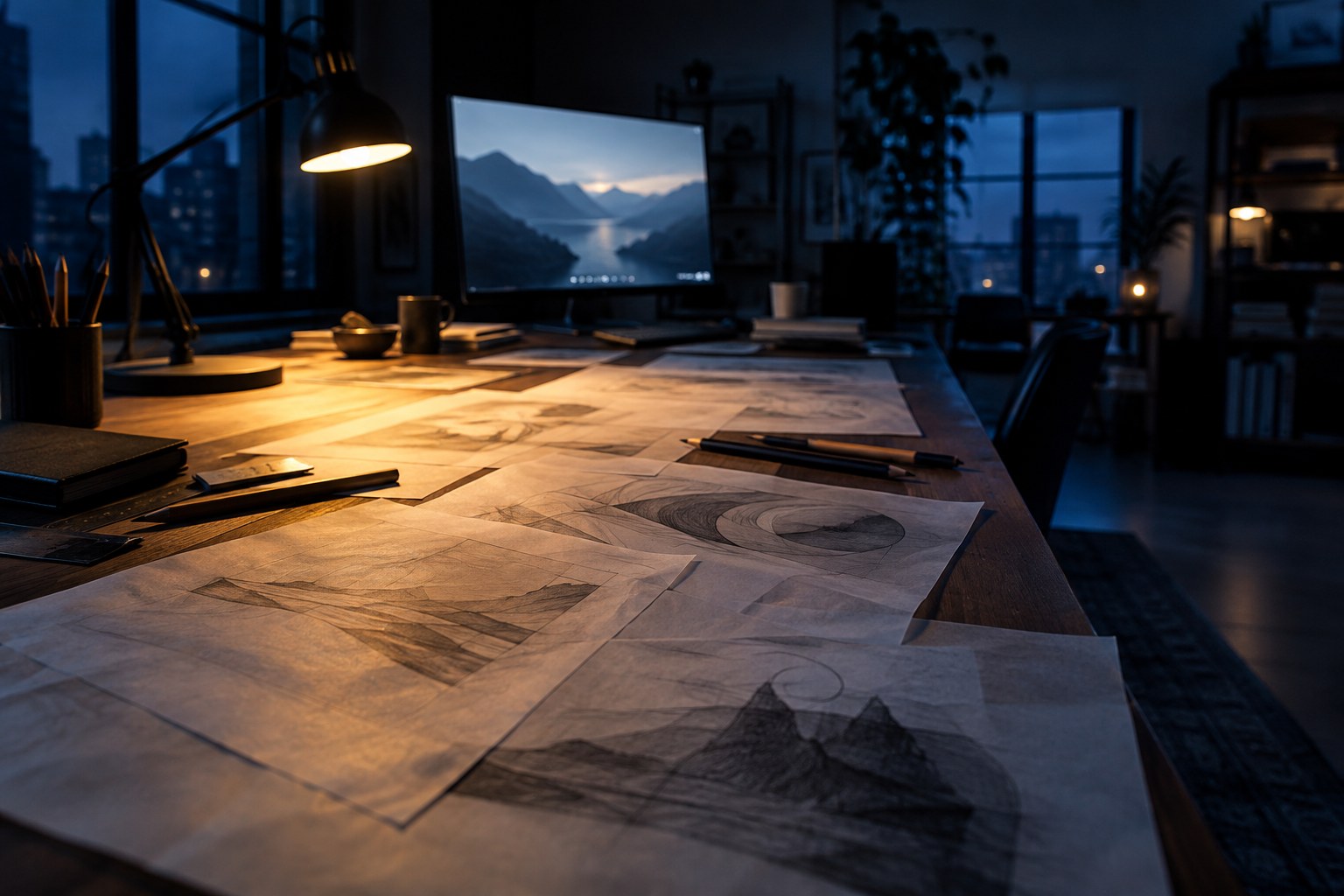
The deal is not starting from zero. Walt Disney Imagineering R&D already uses Firefly Foundry in its Theme Park Design Toolkit, which was announced in June. That toolkit includes a sketch-to-image model that turns hand-drawn concepts into 2D concept art, and a custom image model that generates on-brand assets connected to Disney franchises.
In other words, the pattern is: artists sketch, and a private model trained on the company's own visual language helps explore variations faster. Adobe and Disney describe the models as "artist-led".
Why it is raising eyebrows
The announcement has not been received as purely good news. Creative Bloq points to several concerns:
- Layoffs. Disney has had several rounds of job cuts in 2026, including Pixar artists in July. The timing makes many creatives suspect AI will be used to reduce headcount.
- "Artist-led" is vague. For concept artists, a model that turns sketches into finished concept art can sound like a tool that replaces part of their job, not one that supports it.
- A previous AI partnership ended quickly. An earlier Disney arrangement with OpenAI fell apart after OpenAI stopped its Sora model just three months in.
The same report also makes the counterpoint: private models keep Disney's IP away from general-purpose foundation models, which can help with brand consistency, provenance and ownership.
The bigger trend: private models for brands
Whatever you think of the deal, it shows where enterprise creative AI is heading. Instead of prompting a general model and hoping the output looks on-brand, large companies want models trained on their own approved assets, running inside tools their teams already use. Creative Bloq's look at the MAX 2026 session list made a similar point: much of the programme is aimed at marketing directors, agency leads and procurement teams, not only individual creators.
For designers, that has a few practical consequences:
- Brand systems become training data. Clean, well-organised asset libraries are more valuable when they can feed a model. Messy ones produce messy output.
- Taste and direction matter more. If a model can generate fifty variations of a concept, the job shifts toward choosing, combining and refining the right one.
- Rights questions get sharper. Clients will ask what their assets are used for and where the output comes from. Know which tools in your workflow use which models.
What to do as a freelancer or small studio
You do not need a Disney-sized budget to act on this:
- Keep your clients' brand assets tidy and well labelled. It helps with AI tools and without them.
- Add a short line to your contracts or proposals about whether and how you use generative AI, and on whose material.
- Show your process in case studies. Sketches, decisions and rejected directions show the judgement a model cannot provide.
- Learn the commercial-use terms of the AI tools you rely on, so you can answer client questions with confidence.
What to watch at MAX this week
Adobe MAX 2026 runs from November 10 to 12 at the Miami Beach Convention Center, with the opening keynote on November 10 and Sneaks on November 11, according to RedShark News. Adobe had not said in advance what it would show, so expect more detail on Firefly, Foundry and creative agents during the keynotes. We will cover the product news separately once it is confirmed.
Conclusion
The Disney deal is less about one studio and more about a direction: private AI models trained on a company's own creative work, built into everyday tools. It raises fair concerns about jobs and the role of artists, and it also raises the value of well-built brand systems and clear creative direction. The practical move for designers is to keep assets organised, be open with clients about AI use, and make your judgement visible in the work you show.